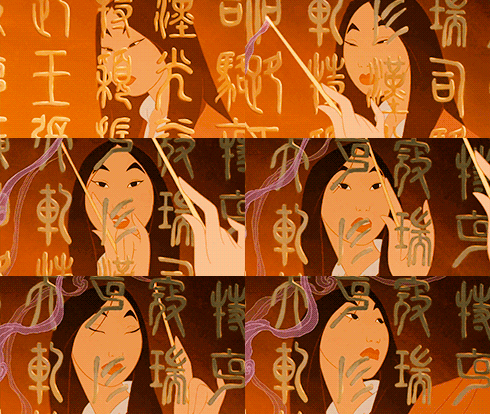
She also has probably the most natural and healthy body shape out of all
Disney girls, she has rolls on her belly for heavens sake!!! Healthy
body representation!!
She also has probably the most natural and healthy body shape out of all
Disney girls, she has rolls on her belly for heavens sake!!! Healthy
body representation!!
A little break from my very very unfortunate project (ha!) so we can have time to celebrate a very important anniversary today! Happy 20th to this girl worth fighting for!
A little break from my very very unfortunate project (ha!) so we can have time to celebrate a very important anniversary today! Happy 20th to this girl worth fighting for!
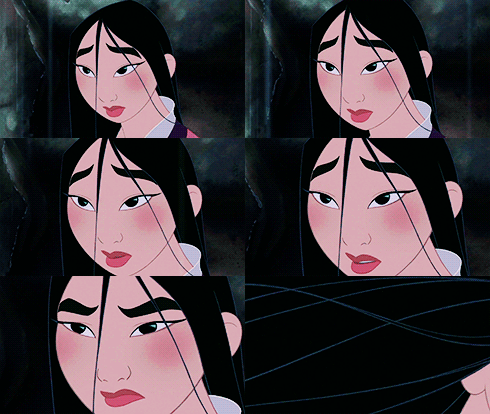
Y’all know when Mulan is sitting in the rain and watches her parents silhouette disappear as the candle is blown out and then her eyes squint in determination and the music that starts to play and you see her go into the family temple and light a match and bow in respect and then sneak into her parents room and switch the scroll for her hair brooch and then the way her reflection is shown as she pulls the sword and cuts her hair?? It’s literally more iconic than any marvel movie
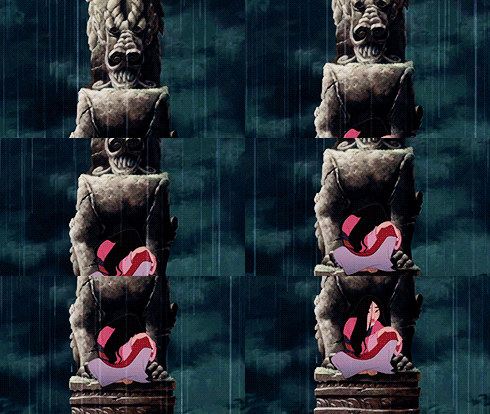
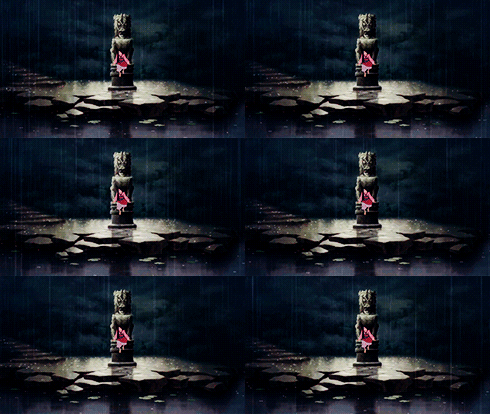
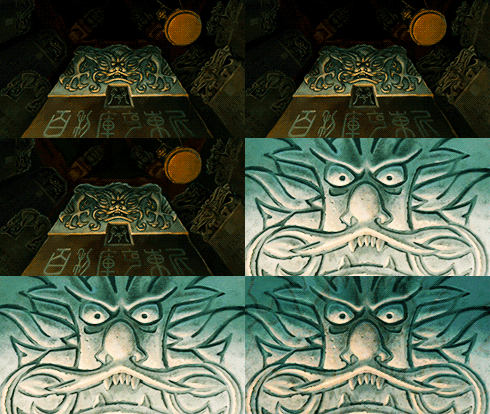
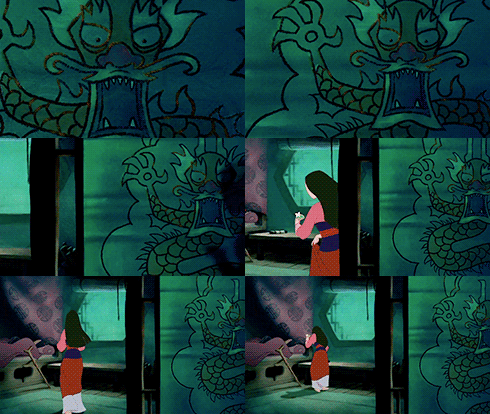
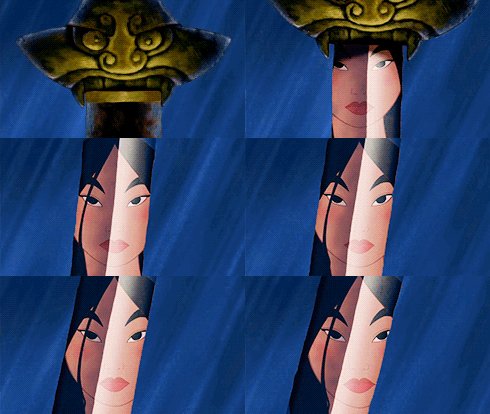
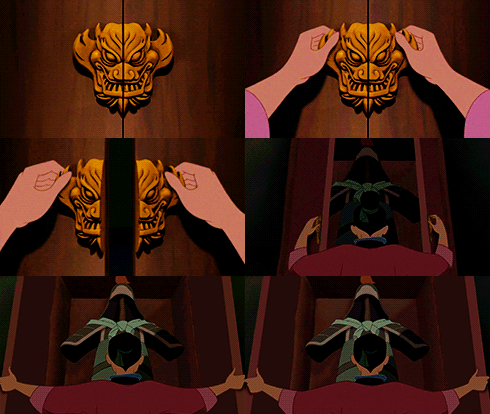
Y’all know that there is heavy symbolism in that scene to show that Mulan is the spirit of the Great Stone Dragon and that’s why Mushu wasn’t able to awaken it?
im sorry What!! i never knew this! my life feels fuller!!! ahhhh
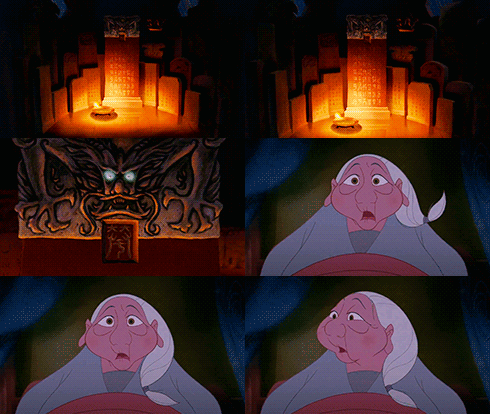
Mulan sits in the rain underneath the statue of the Great Stone Dragon (who is looking down on her), and suddenly decides on a course of action. She looks up, resolved to go to war in place of her father and runs into the temple where she lights the match and beseeches protection for her family. The stone she bows to and that we see lit up by lightening strike is that of the dragon, whose eyes are looking out after her, lit from underneath by the candles. The scene transitions to the divider in the house that also has an icon of the dragon. where she replaces her hair comb with the summons. Then we see the sword hilt, also the dragon, and as she draws the blade we see her face replace it. She ties up her hair, then as she opens the wardrobe, the handles are also the dragon. After donning the armor, the view shows her facing us, with the hilt of the sword (the face of the dragon) in front of her face, where she then turns the sword to reveal her face, and sheaths it. As she leaves, we flash back to the temple, and the eyes of the dragon flash as her grandmother wakes up.
The Great Stone Dragon resides within her. She is the protector of the family.
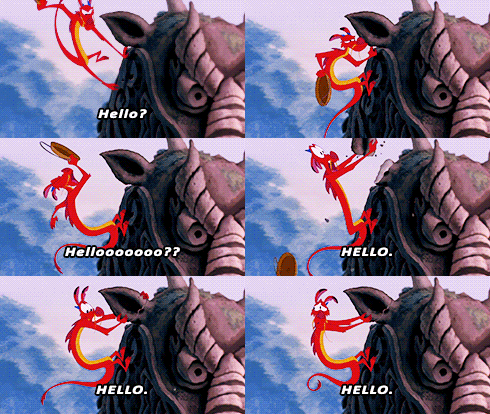
After this explanation, the scene where Mushu cannot wake up the stone dragon makes so much more sense. I appreciate the symbolism so much more. I noticed the dragon but didn’t notice she was constantly juxtaposed with the dragon!
I wrote a college paper once about gender dynamics in Disney films, and part dealt with the emphasis of androgyny in this film. Mulan is an outsider and unsure of her position of the world when she is adhering to both a total feminine role (the matchmaking scene) and a total masculine role (disguised as a male soldier) and it’s only when she’s able to embrace both sides that she is able to fully showcase her abilities and ultimately save the day.
The entire climax, from climbing the poles using sashes, counting on Shan Yu’s complete dismissal of women to get the Emperor to safety, to this scene where she literally uses a symbol of womanhood (within the movie at least) to disarm the villain of his symbol of masculinity and beat him at his own game, shows Mulan relying on the aspects of her femininity that she has grown up adhering to and adapting the tactical knowledge and fighting skills that she learned disguised as a male soldier to those aspects. The result is a unique and innovative view of the world and her course of action that leads her to save the day when the male soldiers failed and the women wouldn’t even have been allowed to try.
This commentary is so curious to me because it’s such an excellent example of white/western cultural bias in portrayals of other cultures. Because fans by themselves are a gender neutral object in Ancient China, especially the large type that Mulan uses in this particular scene is actually masculine if you must code it historically, and in Chinese hands would be used as a tool to support her masculinity and not the other way around. These paper fans are used in general by (male) scholars and artists who decorate its surface with art and calligraphy. It is a symbol of (masculine) intellectual power and the intellectual elite. And if you look to Asian martial arts films, they are a common and almost exclusive weapon of men.
Yet the movie takes this deeply cultural object and either willingly or ignorantly makes it an object of womanhood or femininity. To the extent of my knowledge, this is mostly reflective of western social history. And draws from the coquettish ways Georgian? Ladies would use the fan to signal their romantic interest and all the history and influence around it. The equivalent object for the Chinese lady would in fact be the handkerchief, or a hairstick if you want something pointy.
And it’s all the more curious because at the end of the day it’s a western depiction of a foreign story made for western consumption. It is not a story made by and for Chinese little girls, but to empower and inspire those in the West. Which provides the context for the above (excellent) analysis. It does not need to fully take Chinese history into context because it was never made for us, despite being explicitly about us.


 Celtyradfem