“When they made the reservation system in the federal government, they
decided to put Indians where they thought nobody would want to be,” Matt
Rantanen, director of technology for the Southern California Tribal Chairmen’s Association
, told Ars. “They sent them to locations at the base of mountains or
out in remote areas where the non-tribal population centers were, and
they’re far away from communication centers, where it’s not advantageous
to deploy infrastructure.”
Another impediment is low population density. In a 2015 testimony
before the House of Representatives, Stephen Roe Lewis, the governor of
the Gila River Indian Community in Arizona, noted a rate of 20 people
per square mile (“other tribal nations are even lower,” he followed).
Rantanen estimates the cost of laying fiber ranges from $10,000 to
$50,000 per mile, depending on such factors as easements and topography. With such a limited potential subscriber base, major ISPs see no
possibility for a return on investment.
To make matters worse, those who are interested in paying for
Internet access might not have the wherewithal to do so. In 2012,
approximately 26 percent of American Indians were living in poverty.
According to the 2010 census, the median income
for American Indian and Alaska Native households was $35,062 compared
to the national median income of $50,046. That $35,062 figure only
accounts for the incomes of American Indians and Alaska Natives not
living on tribal lands; were it to solely reflect the incomes in Indian
country, it would likely be notably lower. In 2015, the Gila River
reservation’s figure was $24,771 for example, and 48 percent of
residents there lived below the poverty line. Under conditions like
these, monthly Internet fees of up to $70 are a burden at best.
Social media has become a major outlet of activism as well as a means to spread information. People without internet lack the ability to politically organize online and lose this method of communication entirely. With more and more k-12 schools as well as higher education requiring students and teachers to have a reliable and consistent internet connection, education on reservations and in rural communities is negatively affected.
“When they made the reservation system in the federal government, they
decided to put Indians where they thought nobody would want to be,” Matt
Rantanen, director of technology for the Southern California Tribal Chairmen’s Association
, told Ars. “They sent them to locations at the base of mountains or
out in remote areas where the non-tribal population centers were, and
they’re far away from communication centers, where it’s not advantageous
to deploy infrastructure.”
Another impediment is low population density. In a 2015 testimony
before the House of Representatives, Stephen Roe Lewis, the governor of
the Gila River Indian Community in Arizona, noted a rate of 20 people
per square mile (“other tribal nations are even lower,” he followed).
Rantanen estimates the cost of laying fiber ranges from $10,000 to
$50,000 per mile, depending on such factors as easements and topography. With such a limited potential subscriber base, major ISPs see no
possibility for a return on investment.
To make matters worse, those who are interested in paying for
Internet access might not have the wherewithal to do so. In 2012,
approximately 26 percent of American Indians were living in poverty.
According to the 2010 census, the median income
for American Indian and Alaska Native households was $35,062 compared
to the national median income of $50,046. That $35,062 figure only
accounts for the incomes of American Indians and Alaska Natives not
living on tribal lands; were it to solely reflect the incomes in Indian
country, it would likely be notably lower. In 2015, the Gila River
reservation’s figure was $24,771 for example, and 48 percent of
residents there lived below the poverty line. Under conditions like
these, monthly Internet fees of up to $70 are a burden at best.
Social media has become a major outlet of activism as well as a means to spread information. People without internet lack the ability to politically organize online and lose this method of communication entirely. With more and more k-12 schools as well as higher education requiring students and teachers to have a reliable and consistent internet connection, education on reservations and in rural communities is negatively affected.
Seen in the window at Gulf of Maine Books in Brunswick, Maine.
Photo: Bill Roorbach
Except America wasn’t an endless expanse of forest with no certain borders. At least not while human beings inhabited it. The idea that native peoples did not cultivate or shape our land and that we had no borders is white propaganda meant to dehumanize and de-legitimize native peoples.
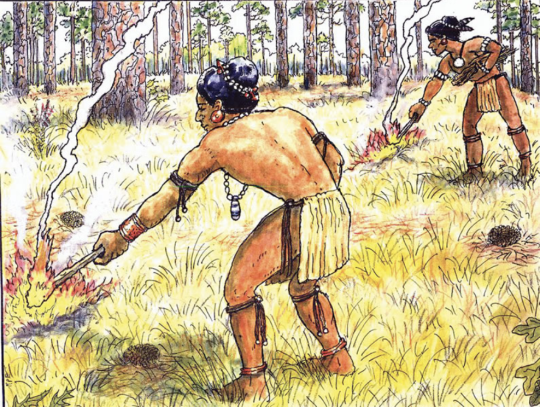
This illustration here show Apalachee people using slash and burn methods for agriculture. Fires were set regularly to intention burn down forests and plains. Why would we do this? Well because an unregulated forest isn’t that great for people, actually. We set fires to destroy new forest growth and undergrowth, and to remove trees, allowing for easier game hunting, nutrient enriched soil, and better growth rates for crops and herbs we used in food and medicine.
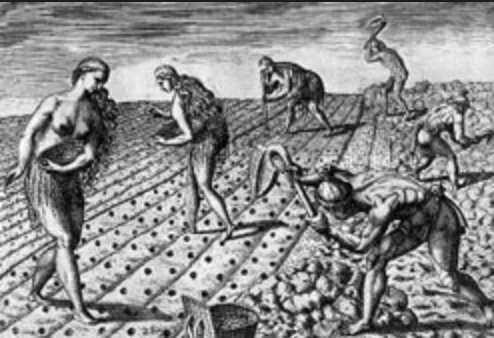
Pre-Colonial New England, where my tribe the Abenaki are from, looked more like an extensive meadow or savannah with trees growing in pockets and groves. Enough woodland to support birds, deer, and moose, but not too much to make hunting difficult. We carefully shaped the land around us to suit our needs as a thriving and successful people. Slash and burn agriculture was practiced virtually everywhere in the new world, from the pacific coast to chesapeake bay, from panama to quebec. It was a highly successful way of revitalizing the land and promoting crop growth, as well as preventing massive forest fires that thrive in unregulated forests. Berries were the major source of fruit for my tribe, and we needed to burn the undergrowth so they could grow.
That changed when white people invaded, and brought with them disease. In my tribe, up to 9 in 10 people died. 90% of our people perished not from violence starvation, but from disease. Entire villages would be decimated, struck down by small pox. Suddenly, we couldn’t care for the land anymore. There weren’t enough of us to maintain a vast, carefully structured ecological system like we had for thousands of years. We didn’t have the numbers, or strength. So the trees grew back and unregulated. We couldn’t set fires anymore, and we couldn’t cultivate the land. And white people would make certain we never could again. Timber, after all, was the most important export from New England.
Endless trees and untamed wilderness is a nice fantasy. But it’s a very white fantasy, one that erases the history of my people and of my land. One that paints native peoples are merely parasites leeching off the land, not masters of the earth who new the right balance of hunting and agriculture. It robs us of our agency as people, and takes our accomplishments from us. Moreover, it implies that only white people ever discovered the power to shape the world around them, and that mere brown people can’t possibly have had anything to do with changing our environment.
Don’t bring back untamed wilderness. Bring back my fire setters, my tree sappers, my farmers and my fishers. Bring back my people who were here first.
Seen in the window at Gulf of Maine Books in Brunswick, Maine.
Photo: Bill Roorbach
Except America wasn’t an endless expanse of forest with no certain borders. At least not while human beings inhabited it. The idea that native peoples did not cultivate or shape our land and that we had no borders is white propaganda meant to dehumanize and de-legitimize native peoples.
This illustration here show Apalachee people using slash and burn methods for agriculture. Fires were set regularly to intention burn down forests and plains. Why would we do this? Well because an unregulated forest isn’t that great for people, actually. We set fires to destroy new forest growth and undergrowth, and to remove trees, allowing for easier game hunting, nutrient enriched soil, and better growth rates for crops and herbs we used in food and medicine.
Pre-Colonial New England, where my tribe the Abenaki are from, looked more like an extensive meadow or savannah with trees growing in pockets and groves. Enough woodland to support birds, deer, and moose, but not too much to make hunting difficult. We carefully shaped the land around us to suit our needs as a thriving and successful people. Slash and burn agriculture was practiced virtually everywhere in the new world, from the pacific coast to chesapeake bay, from panama to quebec. It was a highly successful way of revitalizing the land and promoting crop growth, as well as preventing massive forest fires that thrive in unregulated forests. Berries were the major source of fruit for my tribe, and we needed to burn the undergrowth so they could grow.
That changed when white people invaded, and brought with them disease. In my tribe, up to 9 in 10 people died. 90% of our people perished not from violence starvation, but from disease. Entire villages would be decimated, struck down by small pox. Suddenly, we couldn’t care for the land anymore. There weren’t enough of us to maintain a vast, carefully structured ecological system like we had for thousands of years. We didn’t have the numbers, or strength. So the trees grew back and unregulated. We couldn’t set fires anymore, and we couldn’t cultivate the land. And white people would make certain we never could again. Timber, after all, was the most important export from New England.
Endless trees and untamed wilderness is a nice fantasy. But it’s a very white fantasy, one that erases the history of my people and of my land. One that paints native peoples are merely parasites leeching off the land, not masters of the earth who new the right balance of hunting and agriculture. It robs us of our agency as people, and takes our accomplishments from us. Moreover, it implies that only white people ever discovered the power to shape the world around them, and that mere brown people can’t possibly have had anything to do with changing our environment.
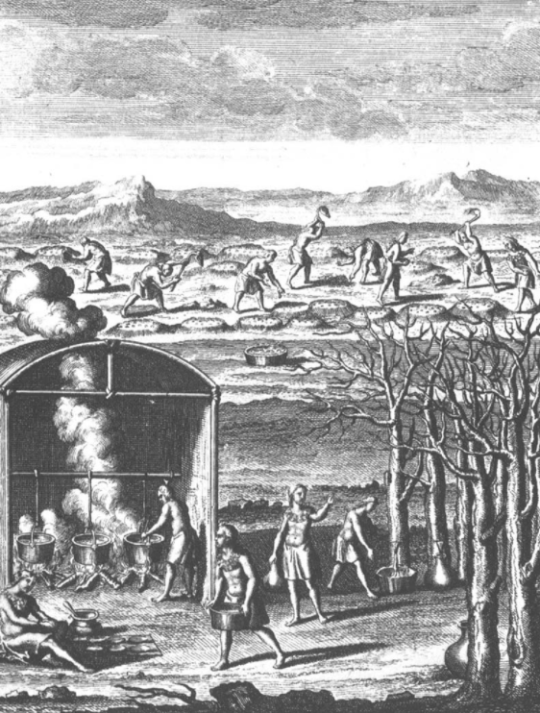
Don’t bring back untamed wilderness. Bring back my fire setters, my tree sappers, my farmers and my fishers. Bring back my people who were here first.
A white man and an elderly Native man became pretty good friends, so the white guy decided to ask him: “What do you think about Indian mascots?”
The Native elder responded, “Here’s what you’ve got to understand. When you look at black people, you see ghosts of all the slavery and the rapes and the hangings and the chains.
When you look at Jews, you see ghosts of all those bodies piled up in death camps. And those ghosts keep you trying to do the right thing.
But when you look at us you don’t see the ghosts of the little babies with their heads smashed in by rifle butts at the Big Hole, or the old folks dying by the side of the trail on the way to Oklahoma while their families cried and tried to make them comfortable, or the dead mothers at Wounded Knee or the little kids at Sand Creek who were shot for target practice. You don’t see any ghosts at all. Instead you see casinos and drunks and junk cars and shacks.
Well, we see those ghosts. And they make our hearts sad and they hurt our little children. And when we try to say something, you tell us, ‘Get over it. This is America. Look at the American dream.’
But as long as you’re calling us Redskins and doing tomahawk chops, we can’t look at the American dream, because those things remind us that we are not real human beings to you. And when people aren’t humans, you can turn them into slaves or kill six million of them or shoot them down with Hotchkiss guns and throw them into mass graves at Wounded Knee. No, we’re not looking at the American dream. And why should we? We still haven’t woken up from the American nightmare.


 Celtyradfem