the concept of anti-swerf is so odd to me. So, feminists who talk about the exploitation and abuse in the sex industry, as well as economic conditions that drive women to these professions, the emotional, health, and physical risks in it, and are generally upset about what fellow women are going through. are bad evil swerfs, but the ones who ignore it and cheer on some cam girl living a comfortable life in the suburbs ……aren’t excluding anyone???
its also pretty classist if you ignore the fact that economic conditions are driving a lot of women to these jobs. I was reading this book about porn, and it talked about how hungary has a booming porn industry bc its a poor country. Is it really a choice is women are doing it bc their starving?
maybe y’all should read a book sometimes.
Anarchist Emma Goldman was against prostitution, she has an essay on it called “The Traffic in Women”
Tag: prostitution
the concept of anti-swerf is so odd to me. So, feminists who talk about the exploitation and abuse in the sex industry, as well as economic conditions that drive women to these professions, the emotional, health, and physical risks in it, and are generally upset about what fellow women are going through. are bad evil swerfs, but the ones who ignore it and cheer on some cam girl living a comfortable life in the suburbs ……aren’t excluding anyone???
its also pretty classist if you ignore the fact that economic conditions are driving a lot of women to these jobs. I was reading this book about porn, and it talked about how hungary has a booming porn industry bc its a poor country. Is it really a choice is women are doing it bc their starving?
maybe y’all should read a book sometimes.
Anarchist Emma Goldman was against prostitution, she has an essay on it called “The Traffic in Women”
Rapist back in prison for plotting to train girl as a prostitute
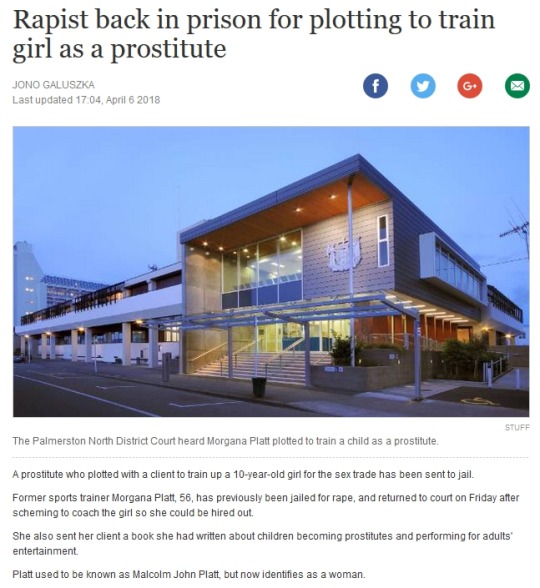

Rapist back in prison for plotting to train girl as a prostitute
Prostitution Myths Part 1
(words from nordicmodelnow.org)
“Myth: Prostitution stops men raping women
Do we really accept that men can’t control themselves? Do we believe that when a man sees a woman or a girl, he can’t control himself and he has to rape her? Do we really accept that?
No of course we don’t believe that. That is infantilising men. It is insulting their humanity.
Like rape, prostitution is not only about sex. It is also about power and men using sex to gain personal power.
Punters tell us this in their own words on websites such as punternet.com where they can rate the women they buy. It is chilling and disturbing to read their accounts and to see each punter’s lack of awareness that the prostituted woman is a human being with the same needs and hopes and dreams as he has; to see how he never questions his right to expect and demand that she should be ready to satisfy his every whim regardless of her own feelings.
This is what prostitution teaches punters. It feeds their narcissism.
Prostitution survivors tell us the same story. In her powerful speech at Feminism in London 2015, prostitution survivor Rebecca Mott said that punters think their violence is not real violence because “they view the prostituted as sub-human sexual goods. It is nothing happening to nothing.”
Where do the punters go when they leave the prostituted woman at the side of the road or they walk out of the brothel?
They go back to their homes and jobs and leisure activities, carrying their prostitution-inflated sense of narcissistic entitlement with them. Along with their sense that women are other, sub-human.
Together these attitudes make it more likely that they will harass, abuse or rape the other women they meet in their lives. Not less likely.
So it is not true that prostitution stops men raping women. In fact the opposite is true. Prostitution makes the rape and sexual abuse of women and children more likely.
Myth: Prostitution is the oldest profession
For millennia human communities were egalitarian and prostitution was unknown.
In her book, The Creation of Patriarchy, Gerda Lerner showed that prostitution was invented relatively recently in the long history of the human race, when men seized control and started the system of male supremacy known as patriarchy.
One of the key ways the men controlled women was to divide them into two groups: respectable women and prostitutes. Respectable women had to cover their heads and the prostitutes were not allowed to cover their heads – so everyone could see which group each woman belonged to. The respectable women were dependent on the patronage of a named man – her husband or father. The prostitutes were fair game for all men, any man, to rape. So women accepted “respectability” in order to avoid being fair game. And then she had to make sure that she was always taken as a respectable wife so she wouldn’t be mistaken for a prostitute who was fair game. She had to distance herself from the prostitutes. And so women were divided, one from another. In order that they could be more easily screwed.
As such, we see prostitution as a form of violence against the individual women and against all women. We do not believe that equality between women and men is possible while the buying and selling of women for sex is considered acceptable.
Myth: Regulation makes prostitution safe
One of the common arguments for regulating prostitution is to make it come under Health and Safety legislation so that it is safer for the women. However, this approach fails to consider that the punters are themselves the source of harm.
Dentist in goggles, mask, gown and gloves
Dentist in goggles, mask, gown and gloves
In any other occupation where there is a risk of exposure to other people’s body fluids, workers are required to wear masks, gloves, goggles, and protective clothing.
Condoms do not come close to reducing risk for those in prostitution to a level comparable with those faced by workers in, say dentistry or nursing, because condoms slip and break, and punters refuse to wear them. And condoms don’t protect the person in prostitution from the punter’s saliva, sweat and other body fluids; or from damage to orifices and internal organs caused by friction and prolonged heavy pounding; or from his violence.
Health and safety standards require employers to RETHINK working practices to eliminate unreasonable risk. In prostitution, this would require participants to wear full protective clothing and the prohibition of any intimate contact. This would, of course, change the nature of prostitution itself.
When it is not possible to make work safe, industries are often closed down. For example, the asbestos industry was closed down because the risks were too great and alternatives were available.
We believe that prostitution can never be made safe and we therefore call for its abolition.
This is not to suggest that women in prostitution should not have every available assistance in reducing the harm and minimising the risks involved. The wish to reduce harm is a major argument for the complete decriminalization of the women involved, as advocated by the Nordic Model.
Myth: Prostitution is a victimless crime
A peer-reviewed study published in The Journal of Trauma Practice 2003 interviewed 854 people in prostitution in nine countries. It found that prostitution “dehumanizes, commodifies and fetishizes women”. The vast majority of the people interviewed:
- Reported experiencing sexual, physical and verbal violence in prostitution.
- Reported a history of homelessness and childhood physical and sexual abuse.
- Met the clinical criteria for post-traumatic stress disorder (PTSD).
- Wanted to leave prostitution but couldn’t see how.
The study concluded that prostitution is multi-traumatic regardless where it takes place.”
Prostitution Myths Part 1
(words from nordicmodelnow.org)
“Myth: Prostitution stops men raping women
Do we really accept that men can’t control themselves? Do we believe that when a man sees a woman or a girl, he can’t control himself and he has to rape her? Do we really accept that?
No of course we don’t believe that. That is infantilising men. It is insulting their humanity.
Like rape, prostitution is not only about sex. It is also about power and men using sex to gain personal power.
Punters tell us this in their own words on websites such as punternet.com where they can rate the women they buy. It is chilling and disturbing to read their accounts and to see each punter’s lack of awareness that the prostituted woman is a human being with the same needs and hopes and dreams as he has; to see how he never questions his right to expect and demand that she should be ready to satisfy his every whim regardless of her own feelings.
This is what prostitution teaches punters. It feeds their narcissism.
Prostitution survivors tell us the same story. In her powerful speech at Feminism in London 2015, prostitution survivor Rebecca Mott said that punters think their violence is not real violence because “they view the prostituted as sub-human sexual goods. It is nothing happening to nothing.”
Where do the punters go when they leave the prostituted woman at the side of the road or they walk out of the brothel?
They go back to their homes and jobs and leisure activities, carrying their prostitution-inflated sense of narcissistic entitlement with them. Along with their sense that women are other, sub-human.
Together these attitudes make it more likely that they will harass, abuse or rape the other women they meet in their lives. Not less likely.
So it is not true that prostitution stops men raping women. In fact the opposite is true. Prostitution makes the rape and sexual abuse of women and children more likely.
Myth: Prostitution is the oldest profession
For millennia human communities were egalitarian and prostitution was unknown.
In her book, The Creation of Patriarchy, Gerda Lerner showed that prostitution was invented relatively recently in the long history of the human race, when men seized control and started the system of male supremacy known as patriarchy.
One of the key ways the men controlled women was to divide them into two groups: respectable women and prostitutes. Respectable women had to cover their heads and the prostitutes were not allowed to cover their heads – so everyone could see which group each woman belonged to. The respectable women were dependent on the patronage of a named man – her husband or father. The prostitutes were fair game for all men, any man, to rape. So women accepted “respectability” in order to avoid being fair game. And then she had to make sure that she was always taken as a respectable wife so she wouldn’t be mistaken for a prostitute who was fair game. She had to distance herself from the prostitutes. And so women were divided, one from another. In order that they could be more easily screwed.
As such, we see prostitution as a form of violence against the individual women and against all women. We do not believe that equality between women and men is possible while the buying and selling of women for sex is considered acceptable.
Myth: Regulation makes prostitution safe
One of the common arguments for regulating prostitution is to make it come under Health and Safety legislation so that it is safer for the women. However, this approach fails to consider that the punters are themselves the source of harm.
Dentist in goggles, mask, gown and gloves
Dentist in goggles, mask, gown and gloves
In any other occupation where there is a risk of exposure to other people’s body fluids, workers are required to wear masks, gloves, goggles, and protective clothing.
Condoms do not come close to reducing risk for those in prostitution to a level comparable with those faced by workers in, say dentistry or nursing, because condoms slip and break, and punters refuse to wear them. And condoms don’t protect the person in prostitution from the punter’s saliva, sweat and other body fluids; or from damage to orifices and internal organs caused by friction and prolonged heavy pounding; or from his violence.
Health and safety standards require employers to RETHINK working practices to eliminate unreasonable risk. In prostitution, this would require participants to wear full protective clothing and the prohibition of any intimate contact. This would, of course, change the nature of prostitution itself.
When it is not possible to make work safe, industries are often closed down. For example, the asbestos industry was closed down because the risks were too great and alternatives were available.
We believe that prostitution can never be made safe and we therefore call for its abolition.
This is not to suggest that women in prostitution should not have every available assistance in reducing the harm and minimising the risks involved. The wish to reduce harm is a major argument for the complete decriminalization of the women involved, as advocated by the Nordic Model.
Myth: Prostitution is a victimless crime
A peer-reviewed study published in The Journal of Trauma Practice 2003 interviewed 854 people in prostitution in nine countries. It found that prostitution “dehumanizes, commodifies and fetishizes women”. The vast majority of the people interviewed:
- Reported experiencing sexual, physical and verbal violence in prostitution.
- Reported a history of homelessness and childhood physical and sexual abuse.
- Met the clinical criteria for post-traumatic stress disorder (PTSD).
- Wanted to leave prostitution but couldn’t see how.
The study concluded that prostitution is multi-traumatic regardless where it takes place.”
If you can read paid for by Rachel Moran and still support the sex industry you have no soul and I hope you die tbh
Opinion | Pimps Hide In Plain Sight In Corporate America’s Boys’ Club
Last month, news broke that relief workers for international charitable consortium Oxfam hired young women in Haiti and Chad to serve as sex workers and demanded sex in exchange for aid.
Oxfam leadership conceded it had been aware of the abusive situation and that it failed to notify other relief organizations looking to hire its former workers that had been involved in the illicit sex trade.
To some, this news may have come as a shock, but as researchers of the sex industry, we were not surprised. We’ve found that illicit prostitution businesses are thriving in a surprising place: the legitimate corporate world. And, we’ve found that the inequities of that world ― where women experience sexual harassment, a gender wage gap and a glass ceiling ― contribute to that sex trade.
To learn about the illicit prostitution trade, we interviewed 44 pimps, men who facilitate and profit from the earnings of sex workers, in Chicago. Of the men we spoke with a third were black, half were poor and didn’t have a good job, and fewer than half were involved in other crimes. These men fit the pop culture stereotype of a pimp. The other half did not: a full third had four-year college degrees, primarily in business administration, two had MBAs and most of these men were white. In addition to their pimping work, nearly half worked in legitimate companies, not in massage parlors or erotica businesses.
A third of the pimps had four-year college degrees, primarily in business administration. Two had MBAs and most of them were white.
These college-educated men told us about working as managers and executives in corporate finance, marketing, retail and sales. They work their white-collar jobs and manage the illicit trade as a side gig, averaging 8 years in pimping. On average, they began pimping at the age of 39. As pimps, they advertise, negotiate with clients, arrange hookups, serve as protection and provide transportation while taking between 20 percent to 60 percent of the earnings.
We found that these illegal businesses grew directly from the misogynistic culture of the legitimate ones that housed them. Some became pimps after learning of demand for paid sex through informal bantering about sexual conquests over lunch or beers with the bros. Half of the pimps started out as customers of sex workers, and several arranged “entertainment” for business clients as part of their job. For example, one CEO we interviewed started pimping during business trips, as clients requested hookups with sex workers. He now takes 60 percent of the earnings of twelve women who service his wealthy overseas clients when they visit Chicago. Other pimps started in college, and one inherited a high-end prostitution business from his uncle, who was a lawyer. One enterprising man approached women co-workers and offered them extra money to provide sexual services to their company’s clients.
One enterprising man approached women co-workers and offered them extra money to provide sexual services to their company’s clients.
That male executives employ prostitutes is not news. Recent reports suggest the practice is rampant in Silicon Valley. Sex trade researchers Christine Milrod and Martin Monto’s 2012 paper found that most clients of high-end escorts on the website The Erotic Review are white, college-educated men in professional jobs; half made six-figure salaries.
Many of the men we interviewed didn’t see their activities as wrong. One man in his fifties told us matter-of-factly that he started pimping to obtain free sex – a privilege of management. He claimed that his six providers enjoy having sex with him. He finds clients by scanning personal ad sections of men seeking women, then he asks those men if they are interested in paying for sex. Pimps often rationalized their actions by insisting that they are helping the women they employ. One explained, that he knew two of his sex workers needed help making ends meet because he got to know them when they worked for him part time in his legitimate business. “They lost their other job,” he said. “They couldn’t afford things.” Another pimp declared: “I don’t like violence and I don’t like exploiting young girls… I have morals… I mean, I’m an MBA.”
We didn’t interview the women who work for these pimps, so we can’t speak for them. But clients treat sex workers as products, rating their physical attractiveness, personality and sexual prowess on multiple websites. The pimps told us that many women have “regular jobs,” but cannot make ends meet or are paying college tuition. One pimp revealed that his five “girls” had regular clerical jobs and did sex work because they “had no raise or promotion in sight.” They earn their raises by taking a night shift of sex work arranged by a man for other men’s pleasure. While sex work provides much-needed cash in the short term, in the long run it is disempowering to women. Blurring the lines between women’s contributions to legitimate work and their sexual attractiveness only reinforces work practices where women are underpaid and unappreciated.
“I don’t like violence and I don’t like exploiting young girls… I have morals… I mean, I’m an MBA.”
That these illicit businesses flourish within legitimate ones is symptomatic of workplace cultures that see women as creating “distractions,” overstress women’s appearance and downplay sexual and gender harassment. Before she blew the whistle on her former bosses, ex-Oxfam employee Helen Evans conducted confidential surveys with 120 Oxfam staff. She reported to Oxfam leaders that 1 in 10 staff members said they had experienced forced sexual contact or assault from other staff. She wonders why Oxfam leaders canceled the meeting to discuss her report. We do too. Ignoring evidence of sexual and gender harassment undercuts women’s participation in the workforce: In this case, it undermines their participation in legal work, thus contributing to the illicit sex trade.
Our research also reveals that business schools should consider changing curricula to emphasize the importance of gender equity and respect in the workplace. Male employees need to speak up against practices that disrespect women in ways subtle and blatant. Women leaders are indirectly challenged with sexist language such as “you have some balls.” Those who complain about sexual harassment risk being labeled “too sensitive,” and most experience retaliation. Companies must end the practice of silencing women who speak out about harassment and demand that the men they employ do not treat their women colleagues like playthings.
Opinion | Pimps Hide In Plain Sight In Corporate America’s Boys’ Club
Opinion | Pimps Hide In Plain Sight In Corporate America’s Boys’ Club
Last month, news broke that relief workers for international charitable consortium Oxfam hired young women in Haiti and Chad to serve as sex workers and demanded sex in exchange for aid.
Oxfam leadership conceded it had been aware of the abusive situation and that it failed to notify other relief organizations looking to hire its former workers that had been involved in the illicit sex trade.
To some, this news may have come as a shock, but as researchers of the sex industry, we were not surprised. We’ve found that illicit prostitution businesses are thriving in a surprising place: the legitimate corporate world. And, we’ve found that the inequities of that world ― where women experience sexual harassment, a gender wage gap and a glass ceiling ― contribute to that sex trade.
To learn about the illicit prostitution trade, we interviewed 44 pimps, men who facilitate and profit from the earnings of sex workers, in Chicago. Of the men we spoke with a third were black, half were poor and didn’t have a good job, and fewer than half were involved in other crimes. These men fit the pop culture stereotype of a pimp. The other half did not: a full third had four-year college degrees, primarily in business administration, two had MBAs and most of these men were white. In addition to their pimping work, nearly half worked in legitimate companies, not in massage parlors or erotica businesses.
A third of the pimps had four-year college degrees, primarily in business administration. Two had MBAs and most of them were white.
These college-educated men told us about working as managers and executives in corporate finance, marketing, retail and sales. They work their white-collar jobs and manage the illicit trade as a side gig, averaging 8 years in pimping. On average, they began pimping at the age of 39. As pimps, they advertise, negotiate with clients, arrange hookups, serve as protection and provide transportation while taking between 20 percent to 60 percent of the earnings.
We found that these illegal businesses grew directly from the misogynistic culture of the legitimate ones that housed them. Some became pimps after learning of demand for paid sex through informal bantering about sexual conquests over lunch or beers with the bros. Half of the pimps started out as customers of sex workers, and several arranged “entertainment” for business clients as part of their job. For example, one CEO we interviewed started pimping during business trips, as clients requested hookups with sex workers. He now takes 60 percent of the earnings of twelve women who service his wealthy overseas clients when they visit Chicago. Other pimps started in college, and one inherited a high-end prostitution business from his uncle, who was a lawyer. One enterprising man approached women co-workers and offered them extra money to provide sexual services to their company’s clients.
One enterprising man approached women co-workers and offered them extra money to provide sexual services to their company’s clients.
That male executives employ prostitutes is not news. Recent reports suggest the practice is rampant in Silicon Valley. Sex trade researchers Christine Milrod and Martin Monto’s 2012 paper found that most clients of high-end escorts on the website The Erotic Review are white, college-educated men in professional jobs; half made six-figure salaries.
Many of the men we interviewed didn’t see their activities as wrong. One man in his fifties told us matter-of-factly that he started pimping to obtain free sex – a privilege of management. He claimed that his six providers enjoy having sex with him. He finds clients by scanning personal ad sections of men seeking women, then he asks those men if they are interested in paying for sex. Pimps often rationalized their actions by insisting that they are helping the women they employ. One explained, that he knew two of his sex workers needed help making ends meet because he got to know them when they worked for him part time in his legitimate business. “They lost their other job,” he said. “They couldn’t afford things.” Another pimp declared: “I don’t like violence and I don’t like exploiting young girls… I have morals… I mean, I’m an MBA.”
We didn’t interview the women who work for these pimps, so we can’t speak for them. But clients treat sex workers as products, rating their physical attractiveness, personality and sexual prowess on multiple websites. The pimps told us that many women have “regular jobs,” but cannot make ends meet or are paying college tuition. One pimp revealed that his five “girls” had regular clerical jobs and did sex work because they “had no raise or promotion in sight.” They earn their raises by taking a night shift of sex work arranged by a man for other men’s pleasure. While sex work provides much-needed cash in the short term, in the long run it is disempowering to women. Blurring the lines between women’s contributions to legitimate work and their sexual attractiveness only reinforces work practices where women are underpaid and unappreciated.
“I don’t like violence and I don’t like exploiting young girls… I have morals… I mean, I’m an MBA.”
That these illicit businesses flourish within legitimate ones is symptomatic of workplace cultures that see women as creating “distractions,” overstress women’s appearance and downplay sexual and gender harassment. Before she blew the whistle on her former bosses, ex-Oxfam employee Helen Evans conducted confidential surveys with 120 Oxfam staff. She reported to Oxfam leaders that 1 in 10 staff members said they had experienced forced sexual contact or assault from other staff. She wonders why Oxfam leaders canceled the meeting to discuss her report. We do too. Ignoring evidence of sexual and gender harassment undercuts women’s participation in the workforce: In this case, it undermines their participation in legal work, thus contributing to the illicit sex trade.
Our research also reveals that business schools should consider changing curricula to emphasize the importance of gender equity and respect in the workplace. Male employees need to speak up against practices that disrespect women in ways subtle and blatant. Women leaders are indirectly challenged with sexist language such as “you have some balls.” Those who complain about sexual harassment risk being labeled “too sensitive,” and most experience retaliation. Companies must end the practice of silencing women who speak out about harassment and demand that the men they employ do not treat their women colleagues like playthings.
Opinion | Pimps Hide In Plain Sight In Corporate America’s Boys’ Club
Liberal feminists: “Listen to women of color! The feminist movement needs to do a better job of including, addressing, and prioritizing the needs of marginalized women!”
Me, a black woman: “I oppose the sex industry because it is making fat sacks of cash off of perpetuating stereotypes, sexualizing racism, fetishization, and portraying my sisters as exotic fuck toys for white people’s consumption. This is inherently dehumanizing and degrading to us as a class. And it affects me personally down the line because it’s conditioning all of these pornsick teenage boys to view me and other women of color not as complex human beings, but toys. It’s sickening to see my sisters reduced to a porn category (“Ebony”). Also, can we address the fact that a lot of women in prostitution are poor black and brown women with nowhere else to turn?
Liberal feminists: “OMG! Die evil SWERF! Why do you hate sex workers!1! Stop being whoreophobic, you’re just a conservative in disguise! #HerBodyHerChoice !”
 Celtyradfem