


https://twitter.com/gabeblessing/status/1012691995075252226?s=21
Black women ……
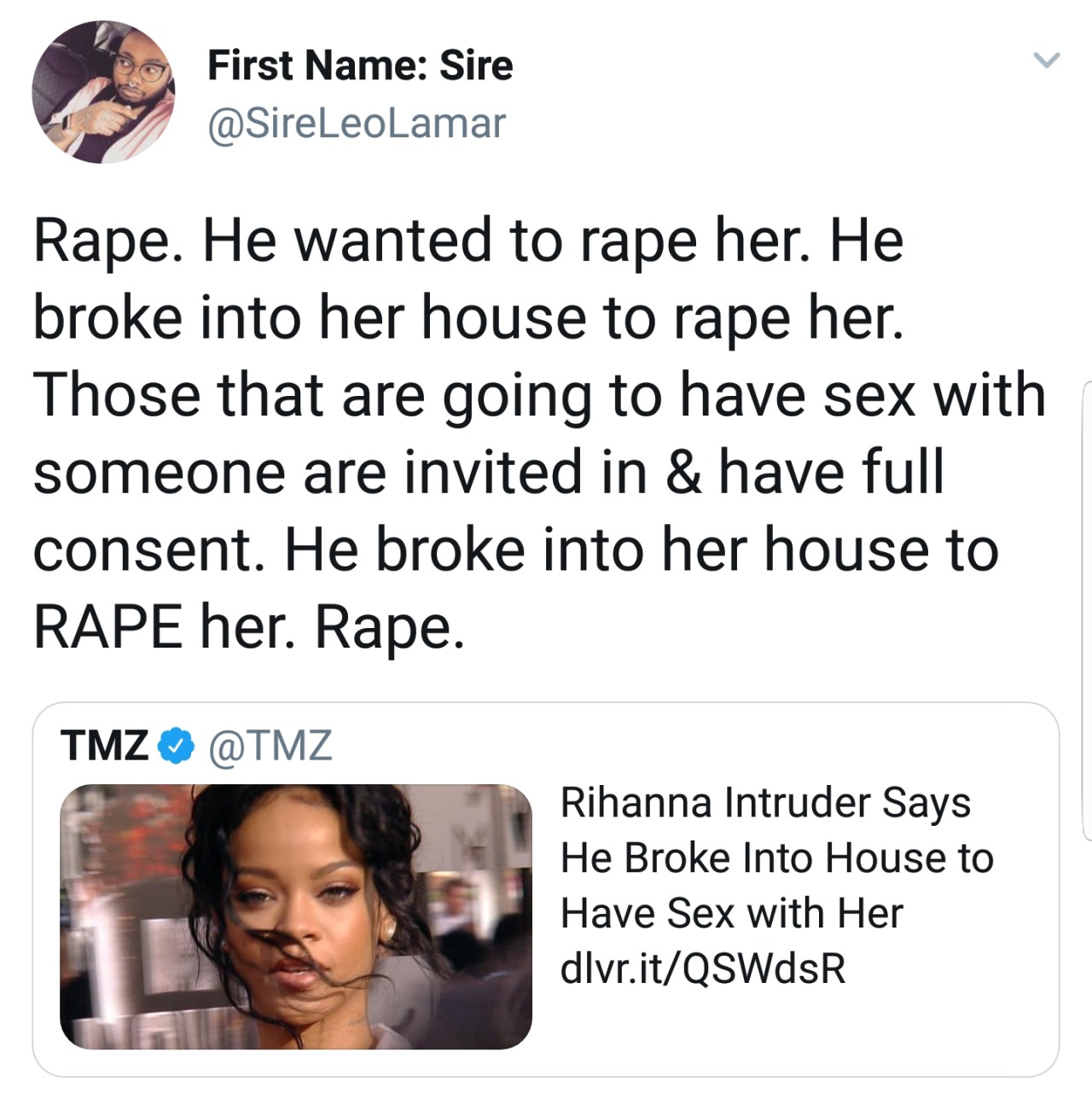
This needs to be boosted. Black women are ignored and silenced in many areas but it is really a problem when it comes to victimization in sexual assault. The “strong black woman” trope allows black women to be ignored when it comes to aid and care. They need us fam. Black women aren’t superheroes, they aren’t magic, they are human beings, and need help and respect. Stop sexual assaults and help the black woman!
Black women ……
This needs to be boosted. Black women are ignored and silenced in many areas but it is really a problem when it comes to victimization in sexual assault. The “strong black woman” trope allows black women to be ignored when it comes to aid and care. They need us fam. Black women aren’t superheroes, they aren’t magic, they are human beings, and need help and respect. Stop sexual assaults and help the black woman!

Terry gets it.
I’m the sigh. Im honestly soo tired for him. And you know what they never ask women why they didn’t beat up their abusers.
And if Terry beat him he’d be the angry, Black, scary man.
The recent cultural reckoning over sexual assault and harassment has highlighted the dangers women face in workplaces throughout Hollywood, media organizations and in public office. The growing number of accusations has put a spotlight on high-profile men’s abuse of power, many times with white men being accused by white women. But what about stories from women of color?
Karen Attiah, The Washington Post’s global opinions editor, tells NPR’s Lulu Garcia-Navarro the current conversation surrounding sexual harassment largely excludes women of color who are victims.
Attiah points to the numerous accusations against musical artist R. Kelly. The claims against the 50-year-old R&B singer span a number of years and range from illegal underage relationships, child pornography and most recently, holding women against their will.
“When these accusations against these powerful white men … came to light, it really again reminded me that we haven’t been talking about some of these figures who are in our popular culture that have been accused of preying on women for decades,” Attiah says.
She says a number of factors contribute to the apparent lack of national discussion about the R. Kelly accusations: His music has become a mainstay in black culture, many women accusing him aren’t high-profile or powerful celebrities – and many of those women are black.
“Part of it, unfortunately, has to do with whether or not we see black women and girls as worthy of care and worthy of protection,” Attiah says. “Unfortunately, it’s hard not to think that if his victims were wealthy white women, that we would be including R. Kelly in these conversations that we’re having right now about sexual abuse and exploitation.”
On conversations about accusations against R. Kelly within the black community
I mean, I hear of course both men and women who say you know what, “He’s gotta go, this guy is a monster, we can’t allow this to be happening.” And then I also just find this sense of, “Well, we need to wait for all the facts.” And so it’s kind of unfortunate to hear that from the black community. So it’s hard to kind of demand that the mainstream media and community stand up for the victims when it seems like the black community, our community, is not always willing to do that, ourselves.
On what happens when women of color do speak up about sexual harassment
You know, it’s really interesting because I think of Lupita Nyong’o’s New York Times article where she talks about her encounter with Harvey Weinstein, and it was one of the more moving and very well-written accounts of what it was like to have to deal with a man who was powerful yet charming yet fearsome. And it struck me that … it was her account that Weinstein or his team forcefully pushed back on. Not only is there a sense of we’re excluded from the narrative, but even when prominent members of our community are in the narrative, that we’re the ones whose stories are pushed back upon. We’re the ones who are lying.
On including more women in the #MeToo movement
I think one thing about the #MeToo movement, a lot of it has been seemingly confined to, I would say, white collar professional jobs. So, if we’re wanting to include more women, we need to also be talking about the abuses that go on in sectors like restaurant workers, domestic help … Because again, what ties all of this together, regardless of income, regardless of status, regardless of color, really, is about the abuse of power. So, women of color who already have harder barriers in those professional circles, I think we absolutely do need to pay more attention to their stories, and part of that will be for us to start listening and to start taking women of color seriously.
When Black Women’s Stories Of Sexual Abuse Are Excluded From The National Narrative
The recent cultural reckoning over sexual assault and harassment has highlighted the dangers women face in workplaces throughout Hollywood, media organizations and in public office. The growing number of accusations has put a spotlight on high-profile men’s abuse of power, many times with white men being accused by white women. But what about stories from women of color?
Karen Attiah, The Washington Post’s global opinions editor, tells NPR’s Lulu Garcia-Navarro the current conversation surrounding sexual harassment largely excludes women of color who are victims.
Attiah points to the numerous accusations against musical artist R. Kelly. The claims against the 50-year-old R&B singer span a number of years and range from illegal underage relationships, child pornography and most recently, holding women against their will.
“When these accusations against these powerful white men … came to light, it really again reminded me that we haven’t been talking about some of these figures who are in our popular culture that have been accused of preying on women for decades,” Attiah says.
She says a number of factors contribute to the apparent lack of national discussion about the R. Kelly accusations: His music has become a mainstay in black culture, many women accusing him aren’t high-profile or powerful celebrities – and many of those women are black.
“Part of it, unfortunately, has to do with whether or not we see black women and girls as worthy of care and worthy of protection,” Attiah says. “Unfortunately, it’s hard not to think that if his victims were wealthy white women, that we would be including R. Kelly in these conversations that we’re having right now about sexual abuse and exploitation.”
On conversations about accusations against R. Kelly within the black community
I mean, I hear of course both men and women who say you know what, “He’s gotta go, this guy is a monster, we can’t allow this to be happening.” And then I also just find this sense of, “Well, we need to wait for all the facts.” And so it’s kind of unfortunate to hear that from the black community. So it’s hard to kind of demand that the mainstream media and community stand up for the victims when it seems like the black community, our community, is not always willing to do that, ourselves.
On what happens when women of color do speak up about sexual harassment
You know, it’s really interesting because I think of Lupita Nyong’o’s New York Times article where she talks about her encounter with Harvey Weinstein, and it was one of the more moving and very well-written accounts of what it was like to have to deal with a man who was powerful yet charming yet fearsome. And it struck me that … it was her account that Weinstein or his team forcefully pushed back on. Not only is there a sense of we’re excluded from the narrative, but even when prominent members of our community are in the narrative, that we’re the ones whose stories are pushed back upon. We’re the ones who are lying.
On including more women in the #MeToo movement
I think one thing about the #MeToo movement, a lot of it has been seemingly confined to, I would say, white collar professional jobs. So, if we’re wanting to include more women, we need to also be talking about the abuses that go on in sectors like restaurant workers, domestic help … Because again, what ties all of this together, regardless of income, regardless of status, regardless of color, really, is about the abuse of power. So, women of color who already have harder barriers in those professional circles, I think we absolutely do need to pay more attention to their stories, and part of that will be for us to start listening and to start taking women of color seriously.
When Black Women’s Stories Of Sexual Abuse Are Excluded From The National Narrative
“access to sex” you realize freindo that sex is a thing you do with another person, and not a material resource you have “access to”
Me, angrily chasing someone around with a board game in my hands: “Why are you denying me access to Hungry Hungry Hippos?”
That’s a cute allegory and all, but let’s not lose sight of the fact that being forced to reluctantly sit through a game of Hungry Hungry Hippos with your extended family at Thanksgiving is not going to give you PTSD, anxiety, depression, an unwanted pregnancy, a potential chronic pain condition, an eating or personality disorder (or both) or leave you otherwise traumatised. We really need to remember that what we’re talking about here is rape and the very real and traumatic consequences of it. Like let’s make poignant jokes to make a point, sure, but let’s not forget the gravitas of what’s being discussed.
“access to sex” you realize freindo that sex is a thing you do with another person, and not a material resource you have “access to”
Me, angrily chasing someone around with a board game in my hands: “Why are you denying me access to Hungry Hungry Hippos?”
That’s a cute allegory and all, but let’s not lose sight of the fact that being forced to reluctantly sit through a game of Hungry Hungry Hippos with your extended family at Thanksgiving is not going to give you PTSD, anxiety, depression, an unwanted pregnancy, a potential chronic pain condition, an eating or personality disorder (or both) or leave you otherwise traumatised. We really need to remember that what we’re talking about here is rape and the very real and traumatic consequences of it. Like let’s make poignant jokes to make a point, sure, but let’s not forget the gravitas of what’s being discussed.



 Celtyradfem